
Mexico City: 36 kilometres of cycle highway for the World Cup
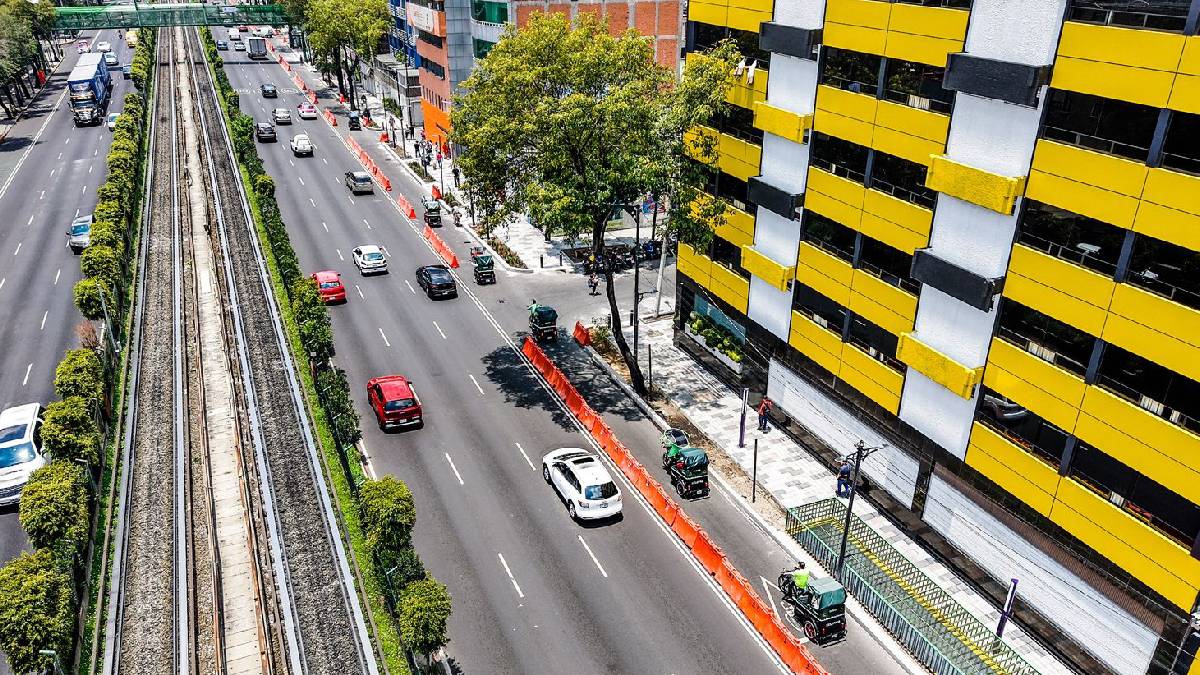
The opening match of the 2026 FIFA World Cup will be played at the Estadio Azteca in Mexico City, one of the largest stadiums in the world. The World Cup now provides the opportunity to build a 36-kilometre-long cycle highway across the Mexican capital within ten months. In our new series ‘A Look at the World’, we focus on a mega-project that could also serve as inspiration for Europe in terms of construction speed and design elements.
Traffic problems in the world’s fifth-largest city
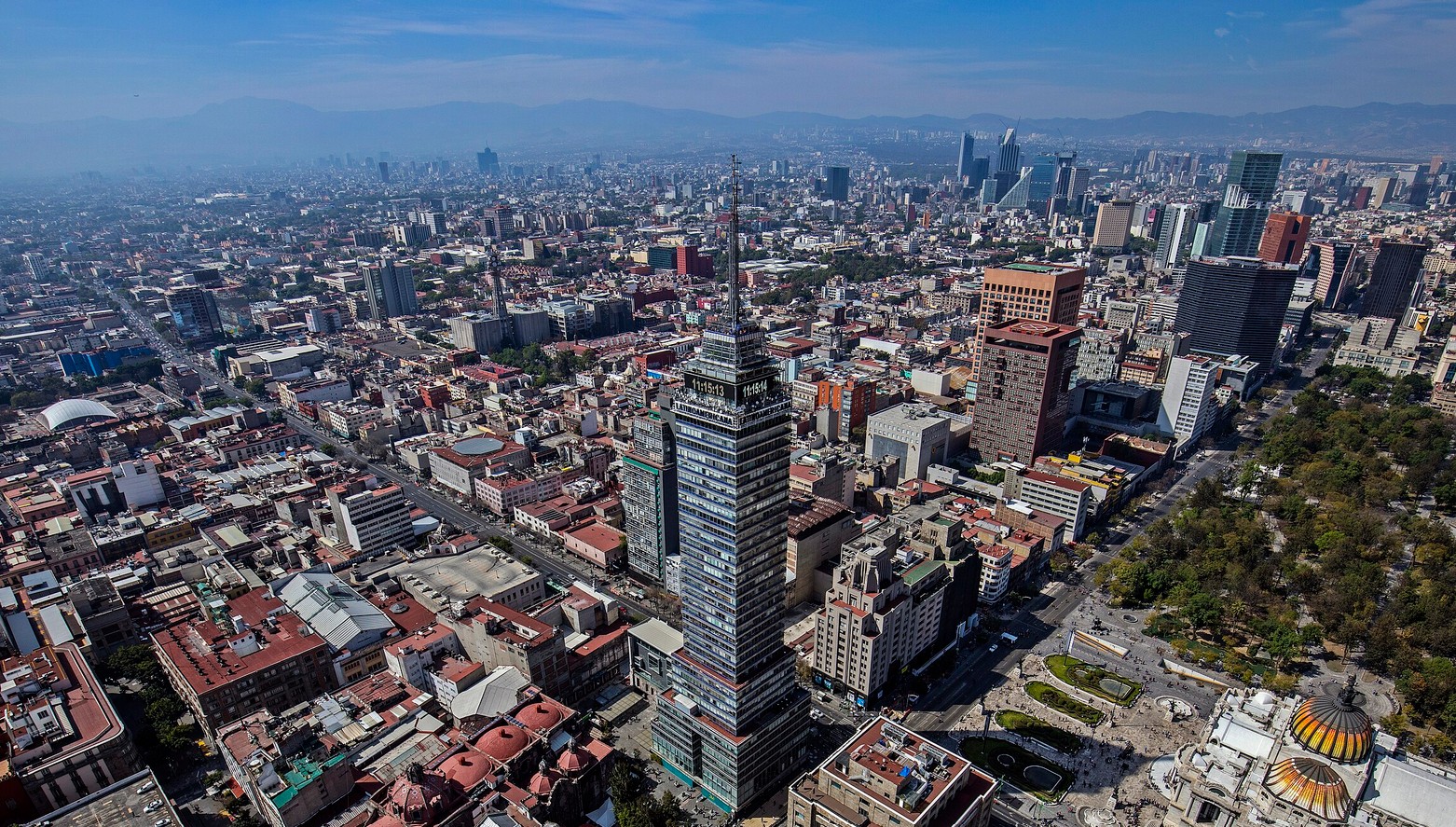
Around 22 million people live in this huge conurbation, which has tackled its serious traffic problems in recent decades primarily through express bus routes, underground railways and cable cars. But cycling has also played an important role since the pandemic. From June 2026, World Cup visitors will be able to reach the Estadio Azteca safely by bike. The local population will benefit from the new cycle route called ‘Ciclovía Gran Tenochtitlán’, which connects the south of the city with the historic centre along the legendary Calzada de Tlalpan.

What Austria knows as ‘pop-up cycle lanes’ from the Covid period and what international experts refer to as ‘protected bike lanes’ is the predominant form of cycle traffic management in Mexico City.
From Aztec causeway to urban motorway
The Calzada de Tlalpan is one of Mexico’s oldest transport routes – and at the same time a symbol of the transformation of urban mobility. As early as the 15th century, it served as a causeway connecting the Aztec capital of Tenochtitlán, located on an island in Lake Texcoco, with the settlement of Tlalpan on the mainland. When the Spanish conquerors arrived in central Mexico in 1519 and overthrew the Aztec empire, the lake was gradually drained over centuries to gain building land for the new colonial capital.
The former waterway thus became a road – and eventually one of the busiest streets in the city. Today, the Calzada de Tlalpan is an urban motorway up to 52 metres wide with an average of four lanes in each direction. More than half of the road space is reserved for cars, with metro lines, bus lanes and pavements added to this. Creating a continuous cycle route in this dense asphalt corridor is considered a planning and symbolic masterpiece.
Pop-up cycle path paves the way
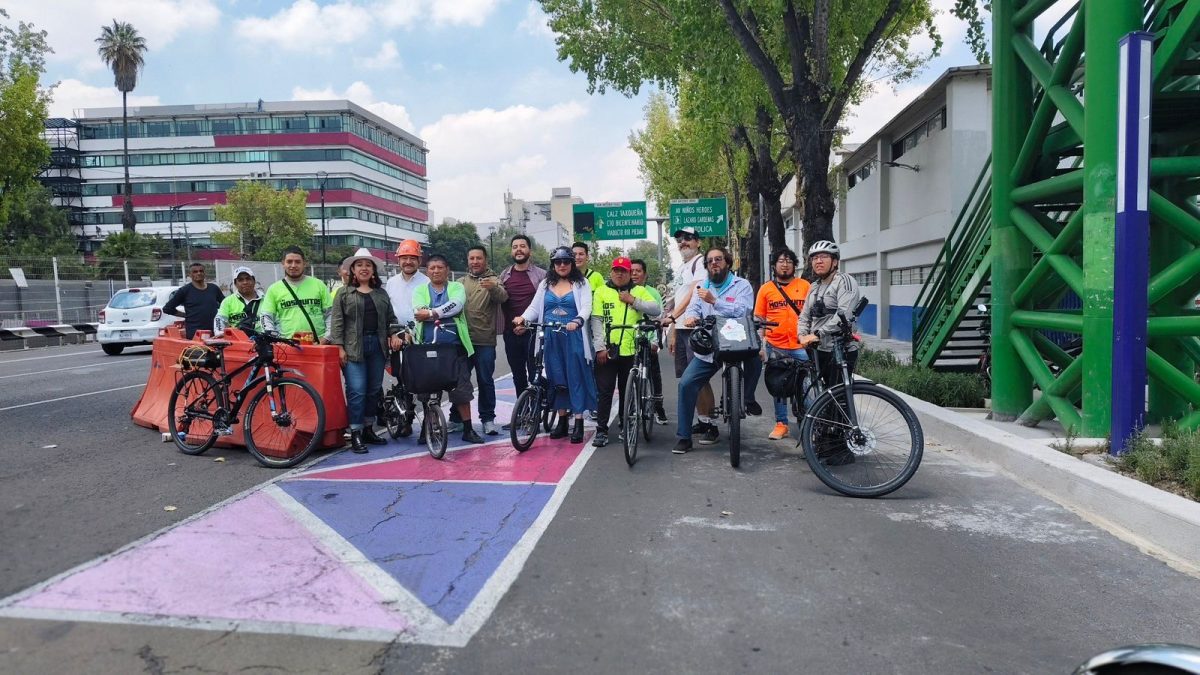
The Ciclovía Gran Tenochtitlán cycle path was officially announced by Mayor Clara Brugada on 1 April 2025. Construction began at the end of July 2025 and is scheduled for completion by the opening match on 11 June 2026 at the latest. Implementation will take place in stages, with a mixture of temporary and permanent elements. In an initial pilot section, a 1.5-kilometre-long car lane was converted into a cycle lane. Mobile barriers, markings and planters were initially used as separating elements – typical tools of tactical urbanism, which cities around the world are using to test how the redesign of traffic areas works in practice.
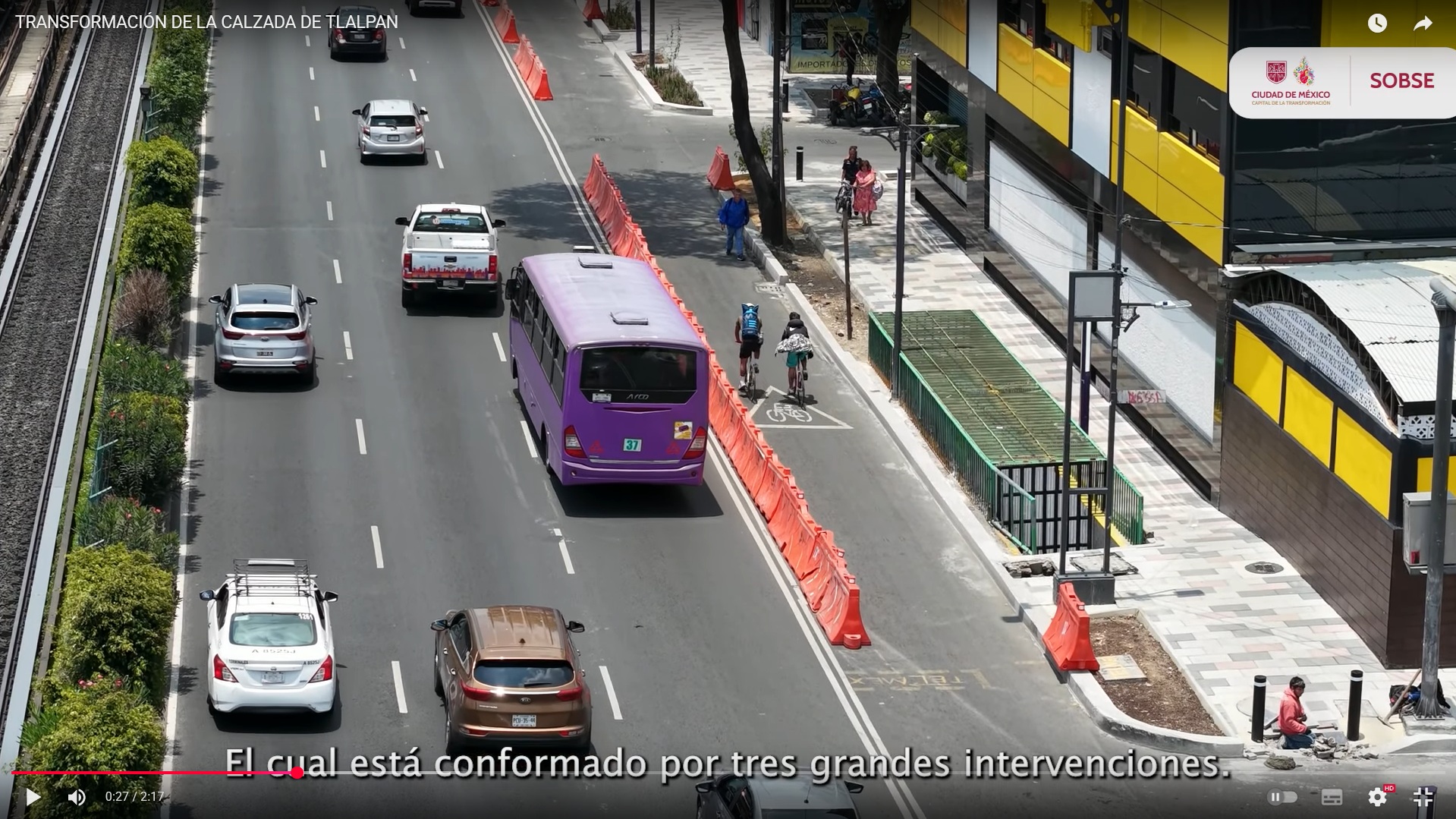
In later construction phases, the temporary elements (shown here in screenshots from YouTube videos of Mexico City) will be gradually replaced by permanent kerbs, green strips and new paving. A total of three types of separation will be used: plant troughs, dividing stones or a combined green strip solution.
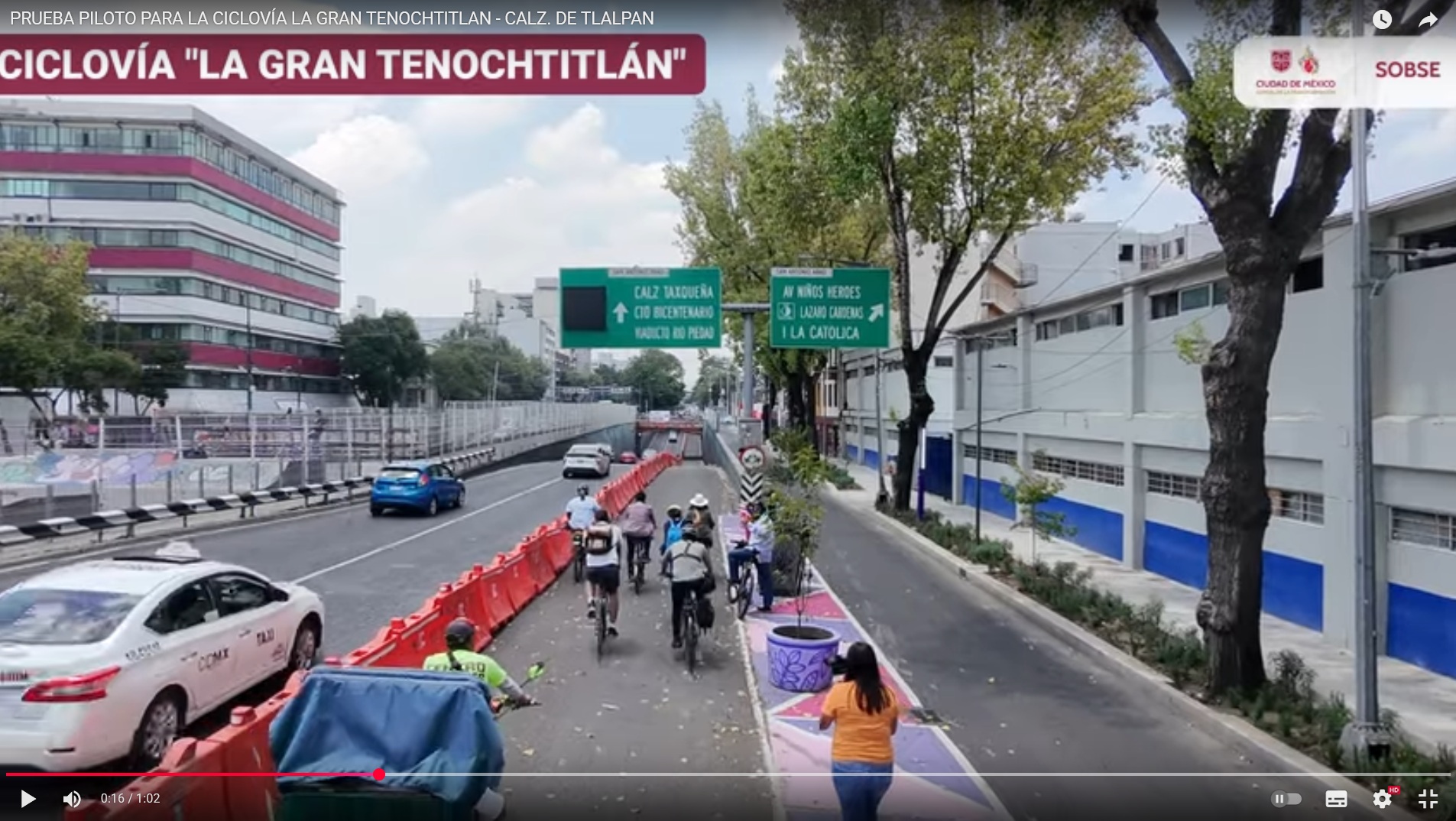
At the same time, pavements are being renovated, lighting improved and new crossings created. Particularly along the Tasqueña and Universidad metro stations, spacious bicycle parking facilities and safe crossings are being built to make it easier to switch to public transport. Several sections of pavement have already been repaved – a detail that, according to the local press, has been very well received by the population. Criticism of the project is mainly focused on potential conflicts of use: bus and car drivers fear additional traffic jams, while motorcyclists are illegally using the new cycle path, causing safety issues. Sex workers are a particular challenge, as they are concerned about losing their usual places of work along the Calzada. The city administration is working with those affected to find good solutions to this problem as well.
Mobility boost thanks to the World Cup
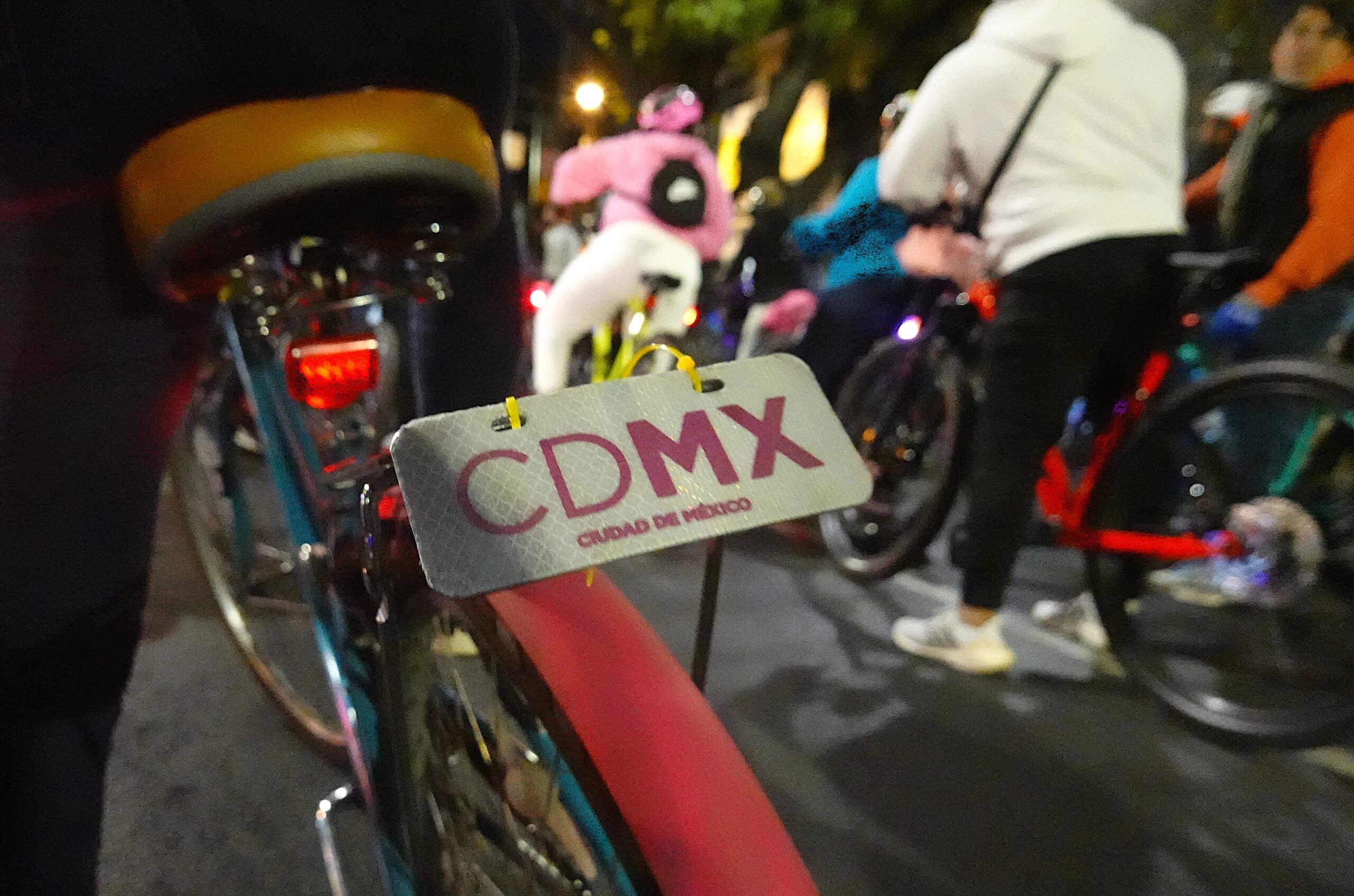
The World Cup is acting as a catalyst for urban transformation. Mexico City is investing around 6 billion pesos (280 million euros) in accompanying infrastructure measures, including road reconstruction and new cycle and pedestrian routes, lighting and metro stations. The aim is to manage the expected rush of football fans in a climate-friendly way and at the same time give the city a sustainable mobility boost. The Ciclovía Gran Tenochtitlán shows that even major transport routes can be redesigned in a short time and with manageable resources – an exciting example not only for Latin America, but also for European cities.
Further links (Spanish)
- Article Calzada Flotante Tlalpan, Infobae
- Ciclovía La Gran Tenochtitlan, YouTube
- Avance de Construccion, YouTube
Photos and screenshots: SEMOVI Mexico City, OBRAS CDMX on YouTube, Cycle Competence-Team, Wikimedia | Text: Climate Alliance Upper Austria
Cycling Competence Members in this article:
More articles with this member:
[crp]
Share this article:
Mexico City: 36 kilometres of cycle highway for the World Cup
Share this article:
The opening match of the 2026 FIFA World Cup will be played at the Estadio Azteca in Mexico City, one of the largest stadiums in the world. The World Cup now provides the opportunity to build a 36-kilometre-long cycle highway across the Mexican capital within ten months. In our new series ‘A Look at the World’, we focus on a mega-project that could also serve as inspiration for Europe in terms of construction speed and design elements.
Traffic problems in the world’s fifth-largest city
Around 22 million people live in this huge conurbation, which has tackled its serious traffic problems in recent decades primarily through express bus routes, underground railways and cable cars. But cycling has also played an important role since the pandemic. From June 2026, World Cup visitors will be able to reach the Estadio Azteca safely by bike. The local population will benefit from the new cycle route called ‘Ciclovía Gran Tenochtitlán’, which connects the south of the city with the historic centre along the legendary Calzada de Tlalpan.
What Austria knows as ‘pop-up cycle lanes’ from the Covid period and what international experts refer to as ‘protected bike lanes’ is the predominant form of cycle traffic management in Mexico City.
From Aztec causeway to urban motorway
The Calzada de Tlalpan is one of Mexico’s oldest transport routes – and at the same time a symbol of the transformation of urban mobility. As early as the 15th century, it served as a causeway connecting the Aztec capital of Tenochtitlán, located on an island in Lake Texcoco, with the settlement of Tlalpan on the mainland. When the Spanish conquerors arrived in central Mexico in 1519 and overthrew the Aztec empire, the lake was gradually drained over centuries to gain building land for the new colonial capital.
The former waterway thus became a road – and eventually one of the busiest streets in the city. Today, the Calzada de Tlalpan is an urban motorway up to 52 metres wide with an average of four lanes in each direction. More than half of the road space is reserved for cars, with metro lines, bus lanes and pavements added to this. Creating a continuous cycle route in this dense asphalt corridor is considered a planning and symbolic masterpiece.
Pop-up cycle path paves the way
The Ciclovía Gran Tenochtitlán cycle path was officially announced by Mayor Clara Brugada on 1 April 2025. Construction began at the end of July 2025 and is scheduled for completion by the opening match on 11 June 2026 at the latest. Implementation will take place in stages, with a mixture of temporary and permanent elements. In an initial pilot section, a 1.5-kilometre-long car lane was converted into a cycle lane. Mobile barriers, markings and planters were initially used as separating elements – typical tools of tactical urbanism, which cities around the world are using to test how the redesign of traffic areas works in practice.
In later construction phases, the temporary elements (shown here in screenshots from YouTube videos of Mexico City) will be gradually replaced by permanent kerbs, green strips and new paving. A total of three types of separation will be used: plant troughs, dividing stones or a combined green strip solution.
At the same time, pavements are being renovated, lighting improved and new crossings created. Particularly along the Tasqueña and Universidad metro stations, spacious bicycle parking facilities and safe crossings are being built to make it easier to switch to public transport. Several sections of pavement have already been repaved – a detail that, according to the local press, has been very well received by the population. Criticism of the project is mainly focused on potential conflicts of use: bus and car drivers fear additional traffic jams, while motorcyclists are illegally using the new cycle path, causing safety issues. Sex workers are a particular challenge, as they are concerned about losing their usual places of work along the Calzada. The city administration is working with those affected to find good solutions to this problem as well.
Mobility boost thanks to the World Cup
The World Cup is acting as a catalyst for urban transformation. Mexico City is investing around 6 billion pesos (280 million euros) in accompanying infrastructure measures, including road reconstruction and new cycle and pedestrian routes, lighting and metro stations. The aim is to manage the expected rush of football fans in a climate-friendly way and at the same time give the city a sustainable mobility boost. The Ciclovía Gran Tenochtitlán shows that even major transport routes can be redesigned in a short time and with manageable resources – an exciting example not only for Latin America, but also for European cities.
Further links (Spanish)
- Article Calzada Flotante Tlalpan, Infobae
- Ciclovía La Gran Tenochtitlan, YouTube
- Avance de Construccion, YouTube
Photos and screenshots: SEMOVI Mexico City, OBRAS CDMX on YouTube, Cycle Competence-Team, Wikimedia | Text: Climate Alliance Upper Austria
Cycling Competence Members in this article:
More articles with this member:
[crp]